
T-bone accidents – also called side-impact or broadside collisions – occur when the front of one vehicle strikes the side of another at a perpendicular angle, forming a “T” shape. They are among the most dangerous types of car crashes, causing serious injuries and generating complex liability disputes that a specialist T-bone accident lawyer is best equipped to handle.
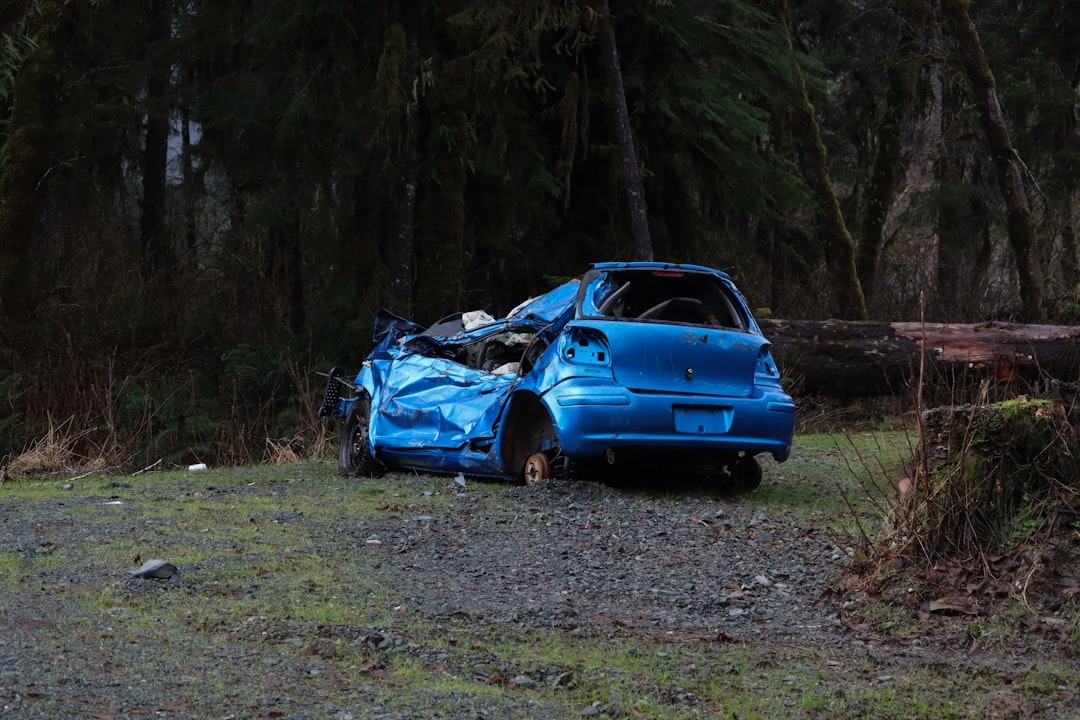
Why T-bone accidents are so dangerous
The side of a vehicle offers significantly less protection than the front or rear. While modern vehicles have side curtain airbags and reinforced door pillars, the door itself provides minimal crumple zone to absorb impact energy. In a T-bone collision, the striking vehicle transfers its full momentum into the door area – directly adjacent to the occupant.
This proximity between impact point and occupant is why T-bone accidents cause disproportionately severe injuries compared to other collision types, particularly at moderate to high speeds.
Common injuries in T-bone accidents
- Traumatic brain injury (TBI) – the sudden lateral head movement in a side impact can cause the brain to impact the inside of the skull even without direct head contact
- Spinal cord injuries – lateral compression forces on the spine are poorly tolerated and can cause disc herniation or, in severe cases, spinal cord damage
- Rib fractures and internal injuries – the door intruding into the passenger compartment can fracture ribs and damage internal organs including the spleen, liver, and kidneys
- Hip and pelvic fractures – the lower door and door sill area absorbs significant impact in lower-speed T-bone crashes, causing leg, hip, and pelvis injuries
- Shoulder injuries – the shoulder is often the point of first contact in a side impact and is vulnerable to fracture, labrum tears, and rotator cuff damage
- Neck and cervical spine injuries – similar to whiplash but with a lateral component that affects different muscle groups
Who is at fault in a T-bone accident?
Fault in T-bone accidents is frequently disputed because both drivers typically claim they had the right of way. Common scenarios and their typical fault allocation:
| Scenario | Typical fault allocation |
|---|---|
| Driver runs red light and T-bones cross-traffic | Red-light runner: 100% at fault |
| Driver runs stop sign | Stop-sign runner: 100% at fault |
| Disputed traffic light (both claim green) | Requires investigation – camera footage, witness statements, accident reconstruction |
| Driver makes left turn into oncoming traffic | Turning driver typically at fault unless oncoming driver was speeding or ran red |
| Driver pulls from parking lot into traffic | Pulling driver typically at fault for failure to yield |
| Driver misjudges gap in traffic | Driver who misjudged: typically at fault |
Evidence that determines fault in T-bone cases
- Traffic camera footage – many intersections have cameras that capture light status and vehicle positions; this is the single most decisive evidence type in disputed T-bone cases
- Dashcam footage – from either vehicle or nearby vehicles
- Witness statements – pedestrians and other drivers who observed the crash
- Vehicle data – EDR/black box data showing speed and braking in the seconds before impact
- Physical evidence – point of impact on each vehicle and final resting positions can help reconstruct which vehicle had the right of way
- Traffic light timing records – municipalities maintain records of traffic signal timing that can support or refute claims about light status
How a T-bone accident lawyer builds your case
A T-bone accident lawyer acts quickly to preserve the evidence that resolves disputed liability cases. Traffic camera footage is typically overwritten within 24-72 hours – a lawyer can send a preservation letter immediately to the relevant municipality or business. They will also:
- Request traffic signal timing records and any malfunction logs
- Retain an accident reconstruction expert to analyse vehicle positions and impact physics
- Subpoena dashcam footage from nearby vehicles if witness accounts suggest other vehicles recorded the crash
- Review and challenge any comparative fault allocation that reduces your recovery
- Calculate the full value of your claim including future medical costs, lost earning capacity, and pain and suffering
Injured in a T-bone accident?
Find a verified car accident attorney near you – free consultation, no fees unless you win.
Frequently asked questions
What if both drivers had a green light?
This is the most disputed scenario in T-bone cases. Practically speaking, both drivers cannot have had a green light – but both may genuinely believe they did in the chaos of the moment. Resolution depends almost entirely on objective evidence: traffic camera footage, witness accounts, and traffic signal records. If no such evidence exists, an accident reconstruction expert analysing vehicle positions, impact geometry, and skid marks may be able to determine which account is consistent with the physical evidence.
Can I claim if I was the driver who was T-boned at an intersection?
Yes, and assuming you had the right of way, your case for compensation is strong. Document the crash thoroughly, gather witness information, and contact an attorney before traffic camera footage is overwritten. If the other driver ran a red light or stop sign, liability is typically clear-cut and your focus shifts to maximising your injury compensation.
How much is a T-bone accident settlement worth?
T-bone accident settlements vary widely based on injury severity. Minor injury cases may settle for $15,000-$50,000. Moderate injuries involving fractures or spinal issues typically settle for $75,000-$250,000. Severe injuries including TBI or spinal cord damage can produce settlements of $500,000 or more. The presence of disputed liability can reduce or eliminate recovery if fault cannot be established – which is why evidence preservation is critical.
What if a defective traffic light caused the T-bone accident?
If a malfunctioning traffic signal contributed to the crash – for example, both lights showing green simultaneously due to a technical failure – the government entity responsible for maintaining the signal may share liability. Government claims involve notice requirements and immunity issues that differ significantly from standard personal injury claims. Contact an attorney immediately, as government notice deadlines can be as short as 90 days from the accident date.